
Driver’s ed teaches the rules. It doesn’t teach what happens when the battery dies in a parking lot at night, or when a fender bender leaves your teen frozen and unsure what to do first. These are the teen driving skills that actually matter.
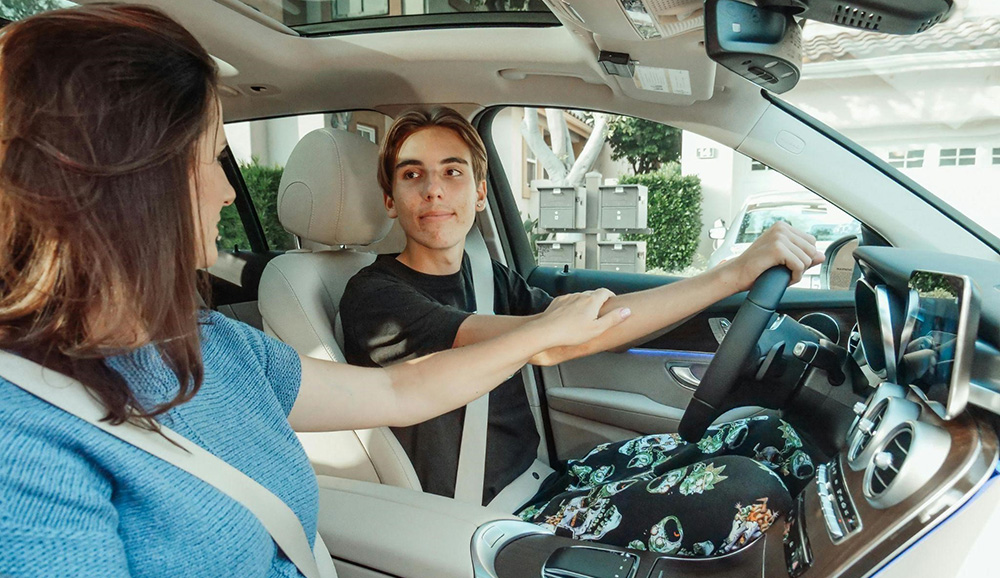
When your teenager finally starts driving alone, something strange happens. The house gets quieter, you look at the clock more often, and every now and then you find yourself imagining all the situations they might run into that no one ever covered in driver’s ed. The truth is, the most important teen driving skills aren’t found in any classroom or written test. They are learned in the driveway, on the side of the road, and in quiet conversations before something goes wrong.
Driver’s education does a decent job teaching the rules of the road. Stop signs, merging, blind spots. But the messy, real-life parts of driving are the parts that actually cause stress, and they usually show up later. A dead battery in a grocery store parking lot. A flat tire in the rain. A minor accident where nobody knows what to say first.
Those moments are where confidence matters most, and most teens don’t get that confidence from a classroom. They get it from a parent walking them through things ahead of time. Think of the following less as lessons and more as conversations worth having before your teen needs them.
Start With the Hood
A surprising number of teenagers drive for years without ever opening the hood of their car. That might sound harmless, but it creates a strange relationship with the vehicle. The car becomes a sealed box that magically works until the day it doesn’t.
Show your teen how to check the oil. It takes two minutes. Pull the dipstick out, wipe it, slide it back in, then check the level. Walking through how to read an engine dipstick properly once or twice helps them understand that the car has signals it sends before something goes wrong.
You’re not trying to turn them into mechanics. You’re simply teaching them that cars need attention, the same way phones need charging and bikes need air in the tires. Once teens understand that idea, they tend to treat the car a little more thoughtfully.
The Fender Bender Conversation
Most teens will eventually experience a minor accident. A bump in a parking lot. A slow-speed collision at a stoplight. Nothing dramatic, but enough to make the moment feel overwhelming. That’s why it helps to rehearse the basics beforehand. Walk through the steps to follow after a minor crash so they know the sequence: pull somewhere safe, check if anyone is hurt, exchange information, take photos, call home. The goal isn’t to make them anxious about accidents. It’s to remove the uncertainty if one happens.
A Simple Glove Box Reminder
One thing adults often forget is that stress can wipe out memory. A teen might know exactly what to do after a fender bender until the moment it actually happens. A surprisingly helpful solution is a small visual reminder card in the glove box.
You can create one using an AI tool for generating graphics, which lets you describe a design in plain language and instantly produces a few layout options. No design skills required. Type something like “teen driver emergency checklist” and the tool generates clean visual versions you can tweak.
Practice the Flat Tire Scenario
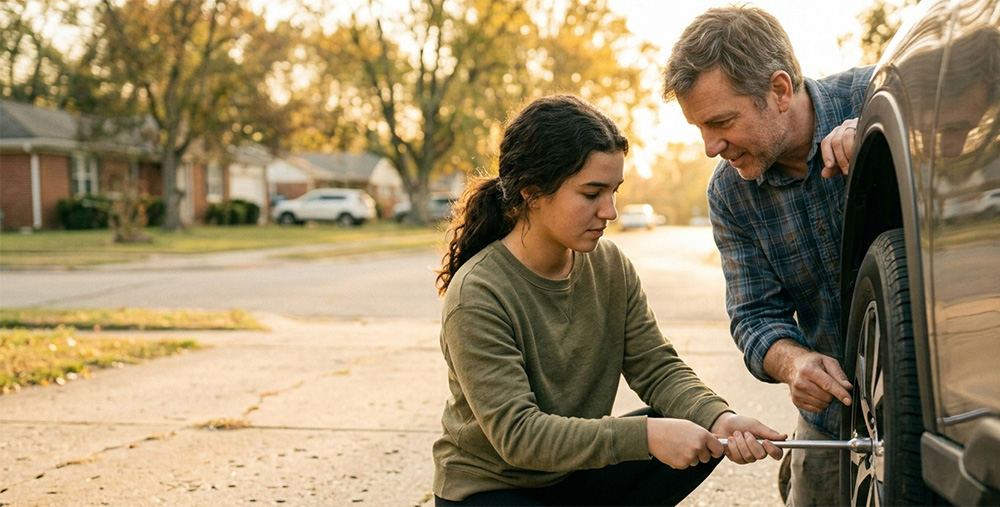
Flat tires are the classic roadside panic moment. Not because they’re difficult, but because the situation feels unfamiliar and a little exposed. The easiest fix is practice. Pick a weekend afternoon and actually go through the process together. Find the spare tire. Find the jack. Loosen the lug nuts and walk through the steps for swapping a spare tire while the car is sitting comfortably in your driveway.
Something interesting happens when teens physically do this once: the mystery disappears. The roadside version later on becomes a problem to solve, not a crisis. And confidence, more than anything else, is what keeps a stressful moment from spiraling. This is one of those teen driving skills that takes twenty minutes to practice but pays off for years.
Build a Real Emergency Kit
Many teens assume whatever came with the car is enough. Sometimes it is. Sometimes the trunk contains little more than a spare tire and a mystery flashlight with dead batteries. A better plan is to assemble a small kit together. Talk through the items every roadside kit should include and why each one matters: jumper cables, a flashlight, a phone charger, a reflective triangle.
Add a few extras if you live somewhere with cold winters or long rural stretches of road. A blanket. A bottle of water. Maybe even a simple poncho. Preparedness doesn’t have to be dramatic. It just needs to be intentional.
Talk About Distractions Honestly
Teen drivers don’t struggle with distractions because they’re irresponsible. They struggle because modern life is noisy. Phones buzz. Music plays. Friends talk nonstop. Notifications appear at the worst possible times.
One of the most valuable teen driving skills you can reinforce is keeping your attention on the road by setting a few small routines before driving even begins. It sounds simple, but small habits remove the constant decision-making that causes distractions.
Getting Pulled Over
Traffic stops can feel intimidating the first time they happen. A quick conversation about how drivers should handle a traffic stop goes a long way. Pull over safely. Keep your hands visible. Stay calm and polite. Most stops are routine. Officers simply want to resolve the situation and move on. Teens who understand the rhythm of that interaction are far less likely to panic.
The Real Lesson
Driving independence is exciting for teenagers. For parents, it’s a mix of pride and quiet concern. The good news is that confidence behind the wheel rarely comes from memorizing rules. It grows from understanding how to handle the unexpected. These teen driving skills won’t be tested on any exam, but they may be the most important ones your teen ever learns. Be sure to that teens know why You Shouldn’t Drive With Two Feet.
Good Sam Roadside Assistance
AUTO and RV Plans

If you are a highway traveler, for recreation or business, a roadside assistance is a must. How about unlimited miles? Good Sam is the number one choice for anyone that has a Car, Truck, Motorcycle or RV. Rates are very reasonable, better than the other guys...