
PPF shops are losing 6.1% in productivity—here’s how PPF shop software turns chaos into control. Streamline scheduling, quotes, inventory, and payroll with a single system. Stop wasting time on paperwork and start growing your output. Efficiency isn’t optional; it’s the difference between keeping up and falling behind.
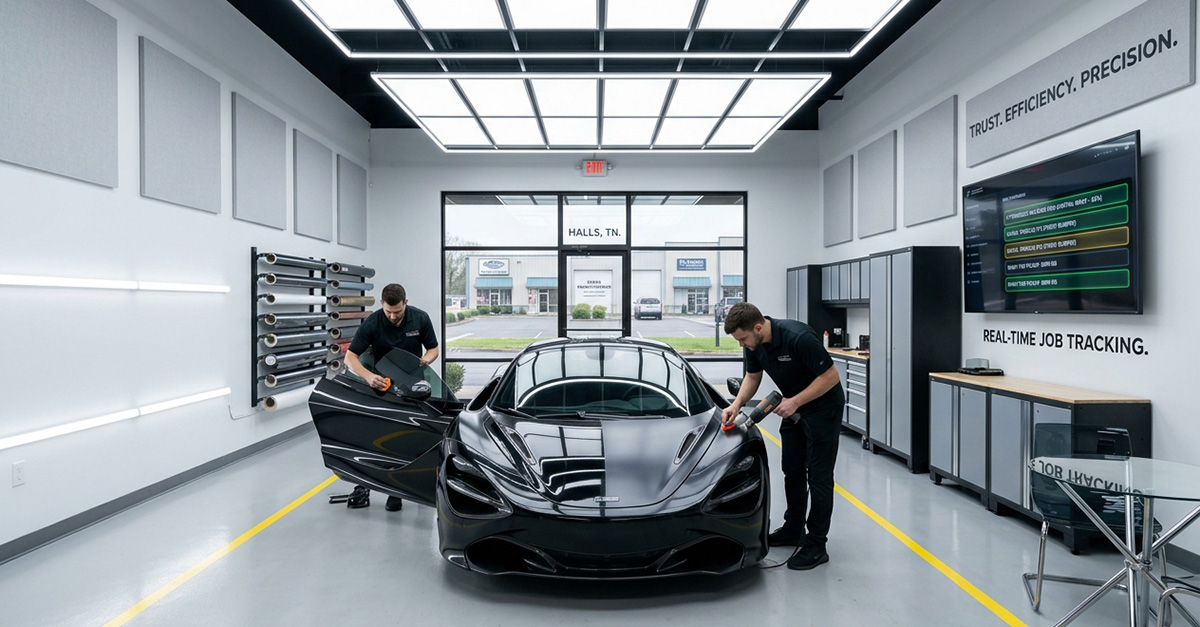
Somewhere in the middle of 2024, automotive repair and maintenance quietly posted the steepest productivity decline of any major service industry in the country. Not a niche subsegment. Not a temporary blip. The entire sector, moving backward while most other service industries moved forward.
For PPF shops specifically, where a single full-body installation can eat an entire day and hinge on dozens of small coordination details, that industry-wide trend is exactly the kind of headwind the right software is built to push back against.
According to the U.S. Bureau of Labor Statistics’ 2024 Productivity and Costs by Industry release. Automotive repair and maintenance posted a productivity decline of 6.1 percent.
The steepest drop among the ten largest selected service-providing industries measured that year. That is not a story about technicians working less hard.
It is a story about hours worked increasing faster than actual output, the classic signature of a workflow bogged down by friction rather than a lack of effort. Here are six ways it helps improve shop efficiency.
1. Simplify Scheduling for Multi-Day Installations
A full vehicle PPF installation involves far more than one appointment. Prep, cutting, application, edge work, curing, and final inspection can stretch across multiple days, making a basic calendar difficult to manage.
PPF-specific software allows shops to break larger installations into individual tasks, assign work to technicians, and track progress as the job moves forward. Managers can see which bays and technicians are occupied and avoid booking work over installations that are still underway.
2. Speed Up Quotes and Customer Bookings
Creating an accurate PPF quote requires knowledge of the vehicle, coverage area, film type, and installation complexity, but generating the actual proposal should not require repetitive administrative work.
Automated quoting tools can turn established pricing rules into professional estimates quickly, while online booking allows customers to schedule without waiting for a phone call. This keeps leads moving even when technicians and front-office staff are busy with vehicles already in the shop.
3. Keep Inventory and Vehicle Documentation Organized
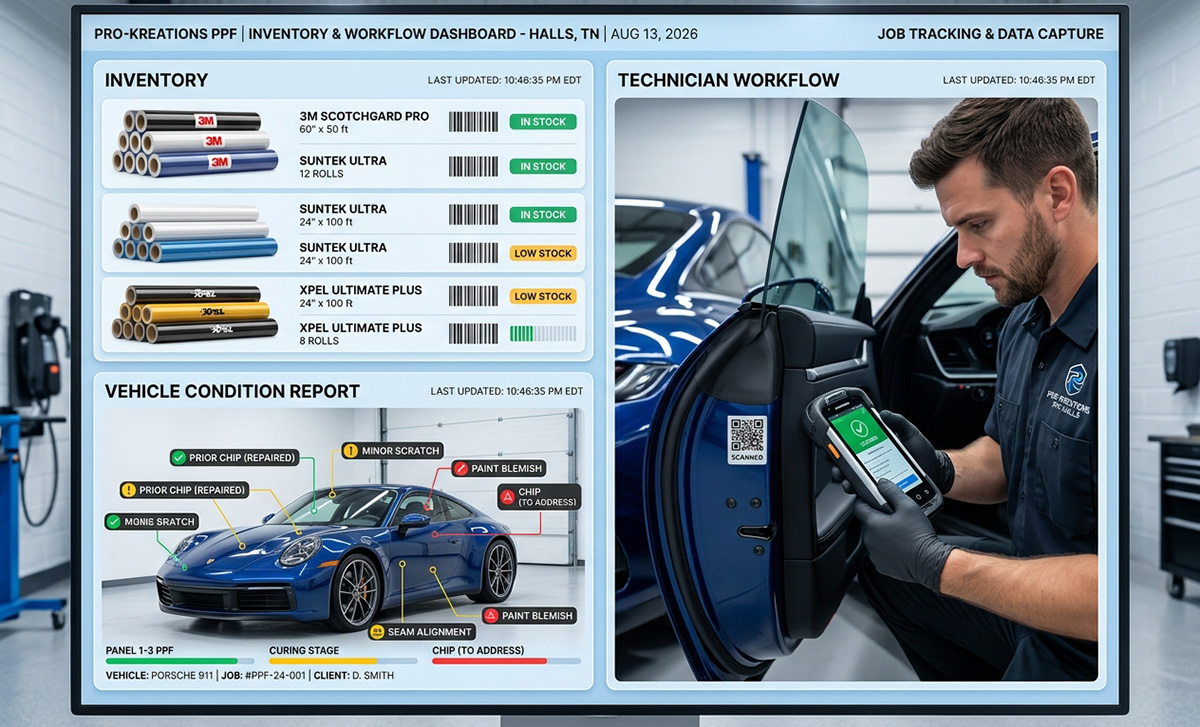
Running out of a particular film during an installation can bring an entire job to a standstill. Real-time inventory tracking and low-stock alerts help shops identify material shortages before they disrupt the schedule.
The same centralized system can also store vehicle condition reports, photos, and inspection notes alongside the customer’s job record. That makes pre-existing damage easier to document and keeps important information connected to the installation rather than scattered across separate tools.
4. Make Payroll and Commission Tracking Easier
Many PPF shops use commission structures based on completed installations, making manual calculations increasingly difficult as the team grows. Managers may otherwise have to piece together technician hours, completed services, and individual commission rates at the end of each pay period.
A genuine vehicle protection film software platform can automate much of this process. Urable combines employee time tracking with commission calculations, allowing shop owners to keep technician earnings connected to the work completed rather than reconstructing everything manually later.
5. Give Managers a Clear View of the Entire Shop
Efficiency depends on more than getting individual installations completed. Managers also need to know what is happening across the business at any given moment.
A centralized dashboard can bring schedules, technician assignments, job status, inventory, and customer information into one place. Instead of chasing updates across different systems, managers can quickly identify scheduling gaps, rebalance workloads, and respond when priorities change.
6. Reduce the Administrative Work Around Every Job
The biggest efficiency gains often come from removing small repetitive tasks that accumulate throughout the day. Re-entering customer information, updating job statuses, checking inventory manually, calculating commissions, and following up on bookings all take time away from the work that actually generates revenue.
By bringing these processes into one system, PPF software helps shops spend less time managing paperwork and more time completing installations. The goal isn’t simply to make one task faster. It is to create a workflow where each part of the job connects naturally to the next.
Why Connected Workflows Matter
The biggest efficiency gains often come from having the moving parts of a PPF shop connected rather than managed separately. A centralized workflow can help with:
- Better coordination: Everyone can see job status, assignments, and upcoming work in one place.
- Fewer mistakes: Shared information reduces duplicate data entry and missed updates.
- Faster decisions: Managers can quickly see where delays or scheduling gaps are developing.
- Less administrative work: Staff spend less time switching between spreadsheets, calendars, and other disconnected tools.
When these processes work together, the shop can keep installations moving without constantly chasing information.
Final Thoughts
The productivity decline the Bureau of Labor Statistics documented across automotive repair and maintenance is not an abstract economic statistic. It reflects a real, measurable pattern of shops doing more hours of work without a matching increase in output, exactly the kind of gap that scattered scheduling, manual quoting, and disconnected payroll tracking tend to create.
For PPF shops specifically, where installations are complex, multi-day, and dependent on both material availability and technician coordination, closing that gap comes down to replacing fragmented tools with a single system built around how the work actually happens. Shops that make that shift are not just saving time on individual tasks. They are pushing back directly against the exact industry trend the data shows working against them.