
Building a hot rod gives you the chance to create something that reflects your own taste. You might want a cleaner engine bay, a different intake setup, or a part that fits a design you cannot find in a store. The challenge comes when standard parts do not match your plans. Some may be too large, too heavy, or simply shaped the wrong way.
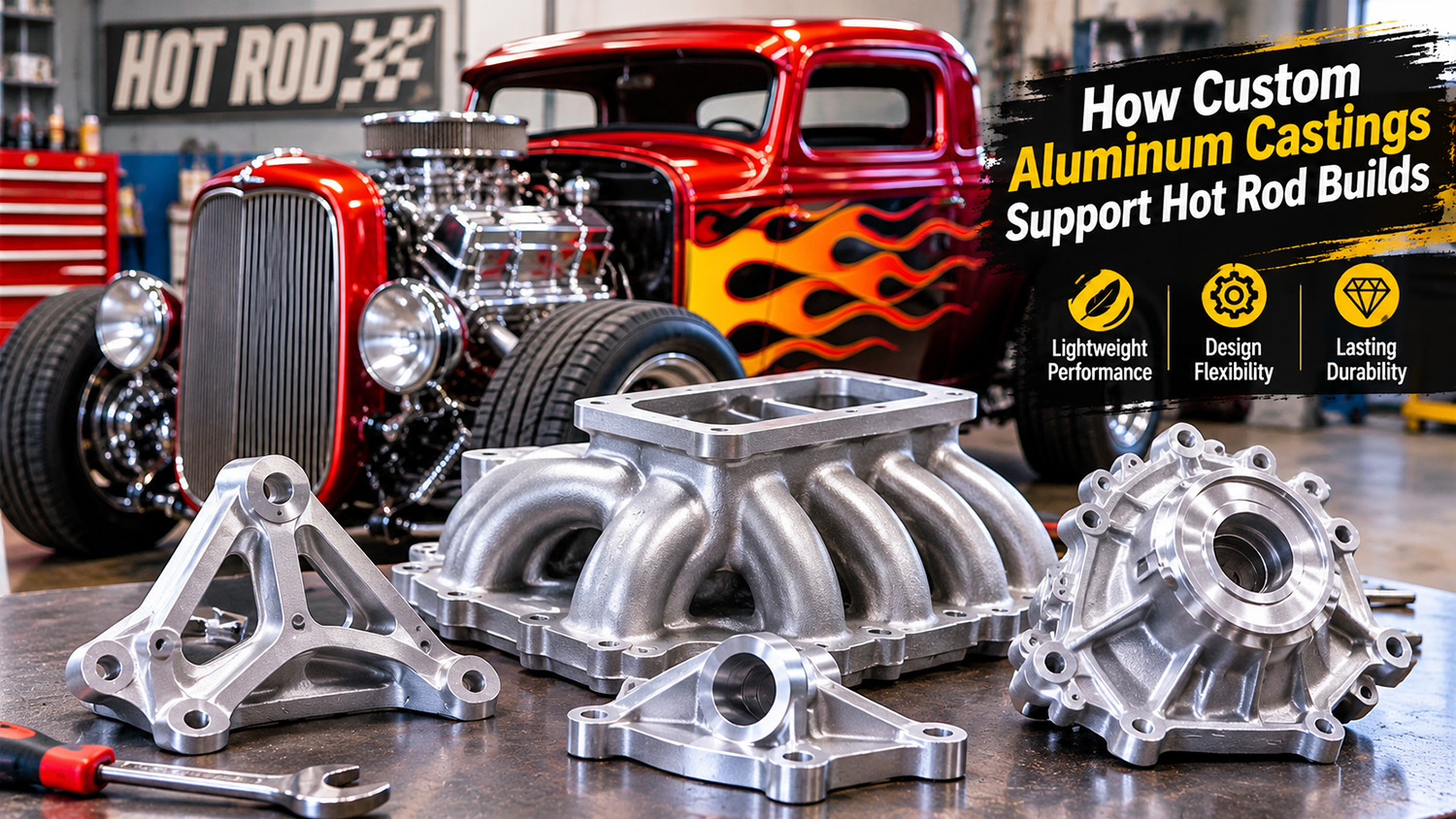
Custom aluminum castings can help solve these problems. They allow parts to be made around a specific design instead of forcing the build to work with whatever is available. From small brackets to more complex components, the process gives builders another way to bring their ideas to life.
Here are some ways custom castings can support a hot rod project.
Custom Aluminum Castings Allow Parts to Match Your Design
Every hot rod build has its own needs. Two cars may use the same engine but have different layouts, body styles, and space limits. A standard part that fits one build may not work in another.
Custom casting gives you more freedom when planning a component. A pattern is made from the desired shape, then used to form a mold. Molten aluminum is poured into that mold and allowed to cool before the part is removed and finished.
This process can be useful when you need a shape that would be difficult or costly to make from a solid block of metal. For example, a custom housing or bracket can be designed around the available space in the engine bay. You can also plan mounting points and other details before the part is made.
Aluminum Helps Keep Weight Under Control
Weight is an important part of any performance build. A heavy component can add to the vehicle’s total weight, while lighter parts may help reduce the load on certain systems.
Aluminum is useful because it weighs less than many common metals used in vehicle parts. This makes it a popular choice for components where weight needs to be controlled without giving up useful strength. The right alloy still matters. Different aluminum alloys have different levels of strength, hardness, and resistance to heat or corrosion. A part that holds a decorative cover will have different needs from one that supports a load or sits near a hot engine.
Do not assume that every aluminum casting will be strong enough for every job. The part’s purpose, shape, alloy, and expected working conditions should guide the design.
They Can Bring Complex Shapes to Life
Some hot rod designs call for parts with curves, openings, raised sections, or built-in mounting points. Making these shapes by cutting and joining separate pieces can take time and may create extra work.
Casting can form several details into one component. This may reduce the number of separate pieces needed and help create a cleaner finished look. It can also make certain shapes easier to repeat if several matching parts are required.
The Aluminum Association explains that sand casting can produce a wide range of shapes, including large or detailed parts. The method is often useful for smaller production runs where the cost of more expensive tooling may not make sense.
For a custom build, this means you can work from a design that suits the car rather than changing the whole setup to fit a standard component.
The Casting Process Needs Careful Planning
A good casting starts long before the aluminum is poured. The design must account for how the metal will fill the mold, how it will cool, and how the finished part may shrink as it solidifies. Poor planning can lead to weak areas, unwanted holes, or parts that do not fit as intended.
This is where engineering and pattern making become important. A pattern is a model of the part used to create the mold. The foundry may review the design and suggest changes that make the part easier to cast while keeping its main purpose.
For example, aluminum casting manufacturers such as Cast Products Inc usually bring engineering, pattern shop work, aluminum sand casting, CNC machining, and finishing together under one operation. That kind of connected process shows how a custom component can move from an early design to a finished part without every stage being handled by a separate supplier.
For a hot rod project, the same planning principles are useful. A part should be checked for fit, strength, and the conditions it will face before it goes into the car.
Machining Helps Create a Better Fit
A cast part may come out of the mold close to its final shape, but some areas still need extra work. Holes, flat surfaces, and mounting points may need to be machined so the component fits the rest of the build.
CNC machining uses computer-controlled tools to cut material with a high level of accuracy. It can help bring a casting to the required size and create clean surfaces where other parts will connect.
This is especially useful when a component needs to line up with existing holes or fit into a tight space. Even a small difference in size can cause problems during assembly, so checking measurements before and after machining is important.
You should also test the part against the surrounding components before final assembly. A good-looking casting is of little use if it blocks access to another part or makes future repairs difficult.
Custom Parts Can Support a More Personal Build
Hot rods often stand out because of the small details. A custom housing, a unique cover, or a carefully shaped bracket can help give the engine bay a look that matches the rest of the car.
Custom castings also allow you to think about appearance and function together. You might want a component that hides certain fittings while keeping them easy to reach, or a shape that follows the lines of the engine without getting in the way.
Still, safety should come before appearance. Parts that carry loads, hold pressure, or affect steering and braking need proper design and testing. Work with people who understand the demands placed on the component, and do not use a decorative casting where a tested safety-critical part is required.
Key Takeaway
Custom aluminum castings can help hot rod builders work around unusual shapes, weight limits, and parts that are difficult to find.
The best results come from careful design, the right alloy, sound casting methods, and proper finishing. Whether you are making a small bracket or a more complex component, think about how the part will fit and perform before it is made. That preparation can help turn a good idea into a build that works as well as it looks.
DOWNLOAD YOUR FREE COPY
Secrets To General Bolt Torque by Bolt Size and Grades

Download your own free copy: Learn what general bolt torque specification to what size bolt and grade, both in US and Metric. Ideal if you do not know the torque spec of a bolt or nut...