
You can improve car sound quality without replacing your entire audio system. Start with the weakest part, such as the speakers, amplifier, or bass response, then upgrade strategically. Here are the most cost-effective ways to get better sound while keeping your car audio budget under control.
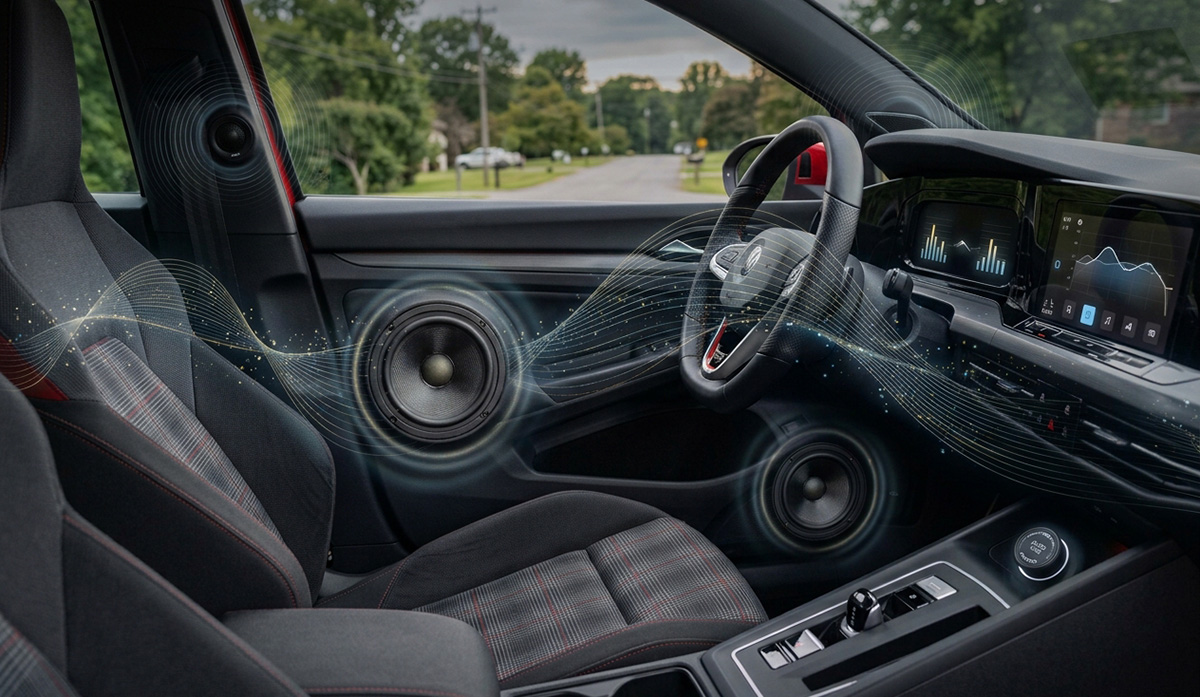
You do not need to spend thousands of dollars to make your car sound better. In many cases, the factory system has a few obvious weak points, and fixing those can make a bigger difference than replacing everything at once.
That is good news if you enjoy music during your daily drive but do not want to turn a simple audio upgrade into a major expense. Music is already a big part of how people use their cars. The trick is knowing where your money will make the biggest difference.
Before buying a new system, consider these practical ways to improve your car’s sound without overspending.
Start With the Speakers to Improve Car Sound Quality
Factory speakers are often the first place worth looking when your audio sounds flat, weak, or distorted. You may still have a perfectly good radio and amplifier, but poor speakers can hold the whole system back.
Replacing the speakers can improve clarity, detail, and overall balance without requiring a complete system replacement. You also do not necessarily need the most expensive models available. A good set that matches your vehicle and existing equipment can produce a noticeable improvement.
Before buying anything, check the size, mounting depth, power handling, and compatibility with your car. A speaker that looks impressive on paper is not useful if it does not work properly with the rest of your system.
How to Choose the Right Replacement Speakers
- Check your vehicle’s speaker size. Look up your year, make, and model to determine the correct speaker size and location.
- Check the mounting depth. Make sure the replacement speaker is not too deep for the factory opening.
- Compare power handling. Check the speaker’s RMS rating against the power available from your factory radio or amplifier.
- Confirm compatibility. Check whether you need mounting brackets, wiring adapters, or other installation hardware before buying.
- Choose the speakers that fit your system and budget. A properly matched speaker is a better upgrade than simply buying the most expensive option.
Upgrade One Component at a Time for Better Car Sound Quality
There is no rule saying you have to replace every part of your audio system at once. In fact, doing everything together can make it harder to know where your money actually improved the sound.
Start with the part that is causing the biggest problem. If your speakers sound harsh or lack detail, replace those first. If the system has good speakers but struggles with volume or clarity, an amplifier may make more sense.
This approach also gives you room to spread the cost over time. If you are comparing options and want to install the best speakers and audio systems for your car, focus on what your current system actually lacks rather than automatically choosing the largest or most expensive setup. That can keep the upgrade focused and within budget.
How to Upgrade Your Car Audio System in Stages
- Identify the biggest problem. Decide whether your system lacks clarity, volume, or bass.
- Upgrade the component that addresses that problem first. Start with speakers for better clarity, an amplifier for more power, or a subwoofer when bass is the main weakness.
- Test the system before buying another component. Listen to the results of the first upgrade and determine what still needs improvement.
- Plan the next upgrade around what you already installed. Make sure new components are compatible with your existing equipment before buying them.
- Repeat as your budget allows. This lets you improve the system gradually instead of paying for a complete upgrade at once.
Improve Car Sound Quality with the Right Amplifier
An amplifier is easy to overlook because it does not produce sound by itself. Its job is to provide the power needed to drive the speakers properly.
A suitable amplifier can give your system cleaner sound and more headroom, particularly when you want to listen at higher volumes. However, bigger is not automatically better. An amplifier needs to match the speakers and the rest of the system.
This is where spending a little time researching compatibility can save you money. Adding a powerful amplifier to poorly matched speakers will not magically turn the system into a premium setup. The components need to work together.
How to Choose the Right Car Audio Amplifier
- Determine what you want to power. Decide whether the amplifier will power your speakers, a subwoofer, or both.
- Check the speakers’ RMS rating. Use the RMS power rating rather than the larger peak-power number when comparing an amplifier to your speakers.
- Choose the right number of channels. A two-channel amp can power a pair of speakers, while a four-channel amp can power front and rear speakers.
- Match the amplifier to the rest of the system. Make sure its power output and speaker impedance are compatible with your speakers before buying.
- Check your factory system first. Some newer vehicles use factory amplifiers or integrated stereos that may require additional equipment to add an aftermarket amplifier.
Consider a Subwoofer Only If You Need More Bass
If your main complaint is weak or thin bass, a subwoofer can make a noticeable difference. It handles the lower frequencies that regular door speakers may struggle to reproduce well.
But this is another area where it pays to be realistic about what you want. If you mostly listen to podcasts, acoustic music, or talk radio, you may not need a large subwoofer at all. A modest setup can provide enough bass without taking over your trunk or your budget.
For drivers who enjoy bass-heavy music, though, a properly matched subwoofer can add depth without requiring every other component to be replaced.
How to Choose the Right Subwoofer for Your Car
- Decide how much bass you actually want. If you want fuller bass rather than extreme volume, a single modest subwoofer may be enough.
- Measure your available space. Check the area where you plan to install the subwoofer before choosing its size or enclosure.
- Check the RMS power rating. Compare the subwoofer’s RMS rating with the amplifier’s output to make sure they are properly matched.
- Choose the right enclosure. A sealed enclosure generally produces tighter bass, while a ported enclosure can provide more output.
- Make sure everything is compatible. Check the subwoofer’s impedance and power requirements before purchasing the amplifier or other components.
Make Small Adjustments Before Buying More Gear
Sometimes the problem is your settings rather than your hardware. Before spending money, check your equalizer, balance, fade, and other audio settings.
Try lowering excessive bass or treble instead of simply turning everything up. Make sure the balance and fade controls are centered correctly. If your music comes from a phone, check its playback settings and the quality of the audio source too.
Your listening environment also matters. Road and engine noise can mask quieter details, which may tempt you to keep increasing the volume. Research has examined how ambient vehicle noise can affect drivers’ perception of in-car sounds and warnings. In practice, a cleaner setup at a sensible volume is often more enjoyable than a system that is simply loud.
How to Adjust Your Car Audio Settings
- Start with a flat setting. Set the bass, treble, balance, and fade to their middle or neutral positions.
- Choose familiar music. Use a well-recorded song you know well so you can hear changes more easily.
- Adjust one setting at a time. Make small changes to the bass, midrange, or treble instead of turning everything up.
- Listen for distortion. If the sound becomes harsh, muddy, or distorted, back off the adjustment.
- Save the setting you like. If your stereo allows it, save your preferred EQ settings so you can return to them later.
- Make adjustments while parked. Fine-tune the system before driving so you are not distracted by the controls.
The Key Takeaway
Good sound comes from components working together. Speakers, amplifiers, receivers, subwoofers, wiring, and settings all play a part. Replacing one expensive component while leaving a major weakness elsewhere may not give you the improvement you expected.
The good news is that you can build toward better sound gradually. Start with the biggest weakness, choose equipment that works with what you already have, and upgrade again when your budget allows.
A better car audio system does not have to be an expensive project. With the right priorities, even a modest upgrade can make your daily drives more enjoyable without leaving your wallet much lighter.

Join RodsShop Newsletter!
Keep up to date with the latest post, "How To' information, Products and much more. I will never blow up your inbox with useless info. My mission is to help the DIY car enthusiast.
I agree to receive emails from RodsShop, Privacy Policy and Terms